

OP-ED | 2014 Legislative Session Winners and Losers

reSET Communications • May 9, 2014

by Susan Bigelow | May 9, 2014 7:37am 

The short 2014 legislative session is in the books. So who won, who lost, and who just broke even?

 Winners

Colleges and other nonprofit institutions — The bill to limit property tax exemptions for institutions that don’t traditionally pay tax, like colleges and universities, didn’t make it out of the Senate. This bill would only have taxed properties acquired after passage, but colleges still lobbied heavily against it. They can breathe a sigh of relief.

Minimum Wage Earners — The minimum wage will go up to $10.10 per hour. Connecticut will be one of the few states where President Obama’s push for a higher minimum wage will bear any kind of fruit at all.

Adoptees — Thanks in part to state Rep. David Alexander, D-Enfield, an adoptee himself, everyone adopted on or after October 1, 1983, will have access to their birth certificates.

Hockey fans — The admissions tax on the XL Center and Webster Arena in Bridgeport will be eliminated. Score.

Flower Street drivers — You want to keep a street open? Stick a few lines in the budget implementer bill, where nobody will notice! That’s what Sen. John Fonfara, D-Hartford, did, in the latest maneuver in the ongoing fight between the DOT and residents over the street. The DOT wants to run the busway through there, while residents want to keep it open. Expect this one to drag on for a while.

United Technologies — They got a $400 million tax credit deal to expand here and hire workers. Nice. This is how we grow business in this state: by shoving pots of money at massive, profitable companies who will probably leave in a decade or two anyway.

Retirees — A bill that lays the foundation for a public retirement option for employees of private companies was passed. This could have been stronger, but it’s something.

Horses — A bill rules that they’re not vicious after all — which is just what they want us to think.

Social entrepreneurs — Entrepreneurs seeking the option to accept investor capitol without losing control of their company’s social mission got what they wanted in the new Benefit Corporation designation, which includes language for a “legacy provision” that makes Connecticut’s Benefit Corporation legislation unique.

Losers

Fiscal hawks — Budget gimmicks, once again, were used to close a deficit. I thought we weren’t going to do this anymore?

Democrats — Sometimes the ruling party uses its overwhelming might and numbers to do good things. Sometimes they just creak and groan and belch like a sleepy, overstuffed guy who had too much pizza and is too lazy to go find his ringing cell phone. Guess which this year was? To give you an example, Democrats slowed down the business of the legislature in the hectic final days to spend literally hours paying tribute to leaders who were retiring.

Legislative harmony — The House and Senate decided that this would be the year where they really disliked one another.

Juvenile justice reform — A bill that would have raised the possibility of parole for offenders serving long sentences after committing crimes as juveniles didn’t make it. There’s a lot that needs reforming about our system of juvenile justice, but we didn’t see much action from the legislature this year.

Gamblers — No keno for you. Want to buy a lottery ticket instead? Sure you do.

Nonprofit hospitals — A bill making it easier for private, for-profit hospitals to take over nonprofit hospitals was passed.

Taxpayers — No rebate, no tax cuts. Your town probably raised the mill rate, too.

Older newbie judges — If you were appointed a judge after the age of 60, you’ll get a lesser pension after you’re forced to retire at 70.

Cities — A bill that would have reduced the size of “Drug-Free Zones” around schools that usually encompass almost the entire land area of a city didn’t happen. The bill taxing nonprofit institutions for new land acquisitions didn’t happen either, so cities won’t see any new revenue there.

Process — Once again, lots of bills got jammed into the budget implementer bill at the last minute. The legislature needs to learn how to manage its time better.

Broke Even

Environmentalists – The legislature passed a temporary fracking moratorium, buteliminated a ban on fishing for vulnerable glass eels, which are juvenile, translucent American eels. Wind power regulations were finally put in place, lifting a de-facto moratorium, but a bill to ban genetically-modified grass seed was voted down.

Gov. Malloy — Apart from the minimum wage hike, there wasn’t much that came out of this session that was notably good for the governor. The loss of the rebate, the sudden budget deficit, and the gimmicky fix might make life on the campaign trail a little more difficult this fall.

Still, could be worse. A Quinnipiac Poll out Friday morning shows the governor’s race frozen in place, with Malloy tied with GOP frontrunner Tom Foley. The session hasn’t impacted the race either way.

Conventions are up next, so let the games begin!

Susan Bigelow is an award-winning columnist and the founder of CTLocalPolitics. She lives in Enfield with her wife and their cats.

Tags: , , , , 

By awalsh • September 29, 2026
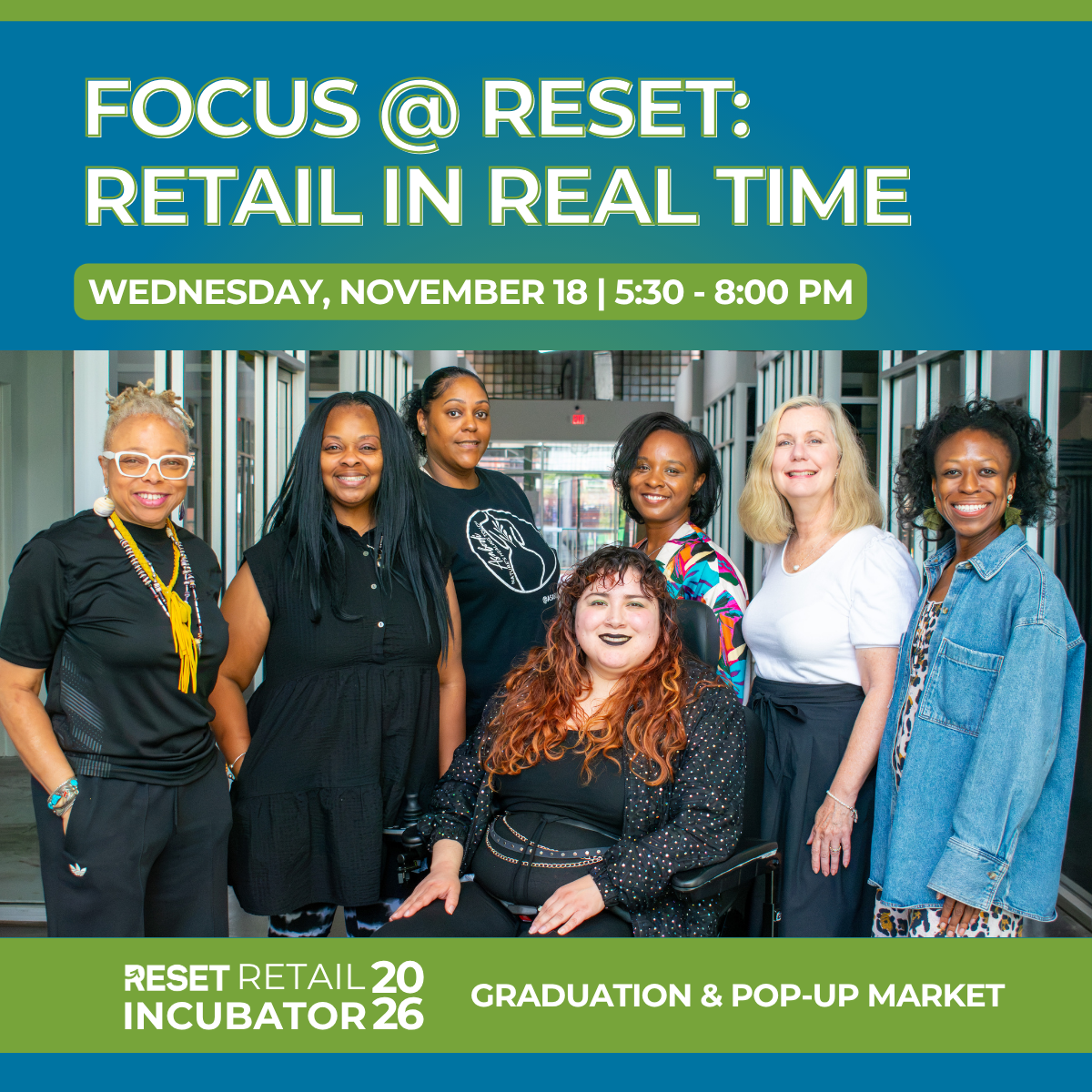
Program Supports Early-Stage Retail Businesses with $7,000 in Grants Hartford, CT – Tuesday, September 29, 2026 – Reset, the Connecticut-based entrepreneurial support organization committed to advancing impact-driven businesses, is proud to introduce the ten businesses participating in the sixth cohort of the Floor–Plan Retail Incubator this fall. The program equips local founders with the tools to launch, grow, and thrive in today's retail landscape. Thanks to support from the Connecticut Department of Economic and Community Development, each business completing the program will receive a $700 grant to support their business. Save the date: Focus @ Reset: Retail in Real Time The Incubator will culminate in the Focus @ Reset: Retail in Real Time graduation and pop-up market event on Wednesday, November 18 from 5:30-8:00pm at Southern Connecticut State University in New Haven, where the community can meet these entrepreneurs and experience their products firsthand. Get tickets at https://bit.ly/retail26 with the early bird discount of $5 off tickets purchased before November 1. "This cohort is building businesses that infuse care, heritage, and artistry into every product they make, and we’re excited to develop strong local businesses that invest right back into our communities," said Sarah Blecher, Executive Director of Reset. "This group brings the total number of retail businesses supported through the Retail Incubator to 73 since its launch in 2021." "From Puerto Rican pastries to block prints about collective liberation, this cohort shows how many different paths lead to a meaningful retail business," said Ndubisi Okeke, Reset Program Manager. "Our Retail Incubator gets them ready for holiday sales and sustainable operations well beyond this season, building businesses with impact." Comprehensive Support for Connecticut Entrepreneurs The Retail Incubator reflects Reset's commitment to supporting entrepreneurs who are building businesses that create positive community impact. During the 12-week program, participants access experienced mentors, legal and financial support, peer networks, and real-world opportunities to test and refine their business models. The $700 small business grant at the conclusion of the incubator provides additional support to grow their businesses. The Ten Businesses in This Year's Floor–Plan Retail Incubator: Assiah Tea & Wellness , founded by Margo Jones, offers premium loose-leaf teas, handcrafted herbal blends, and curated tea services, combining hospitality, education, and wellness to encourage connection and intentional self-care. Asabodi, created by Melissa Carrasco, is a growing small business offering vegan and plant based skincare products like turmeric sugar scrub, body butters, lotions, African black liquid soap, and scalp stimulator. Dream Fleurs , founded by accessory and web designer Maureen Connelly, is a lifestyle accessory brand inspired by flowers, travel, and historic gardens around the world. Granny's Doggie Treats , is a growing small business created by Claudia Cupe, specializing in quality, homemade dog and cat treats crafted to provide pet parents with wholesome, flavorful options while promoting responsible pet care and supporting the special bond between pets and their families. L&M Desserts , led by owner and head baker Anaïs Esther Nuñez, is a family-operated business bringing authentic Puerto Rican desserts to families, events, and catering clients across Connecticut. NUR the Label , founded by Yasmin Laila, is a contemporary fashion brand reimagining the kaftan through a modern lens, honoring African and Middle Eastern dress traditions with pieces designed for celebrations and everyday expression. Pajareando Press , created by artist, educator, and community organizer Elida Paiz Pineda, creates one-of-a-kind block prints, illustrations, and craft works exploring social justice, collective liberation, and radical joy. Ruby Sampson , founded by Ashley Powdar in 2016 in honor of her grandmother, is an artisan-powered brand based in the U.S. and Guyana that creates silk-lined hair accessories, head wraps, and apparel on a mission to close the grooming gap for natural hair textures. Trinkky Trinkks , founded by performer and choreographer Cristal Coleman, is a specialty gift boutique offering handcrafted jewelry alongside curated handbags, accessories, and unexpected finds, built as a pathway toward generational wealth. Wábi Arts , founded by photographer and arts advocate Kim Weston, is a developing gallery and teaching space in downtown New Haven featuring Connecticut-based and emerging artists and home to the FOCUS Fellowship, a teen photography mentorship program. About the Floor–Plan Retail Incubator Now in its sixth year, it is part of a suite of retail opportunities from Reset and Hartford-based Breakfast Lunch & Dinner, a community activation studio. Reset’s three-month incubator provides entrepreneurial technical support to early-stage retail businesses, helping participants understand customer needs, define pricing strategies, address key legal and financial topics, and prepare for new market opportunities. Entrepreneurs gain insights from industry experts, access a supportive community, and receive practical tools to enhance their business acumen. Through the Floor–Plan partnership, entrepreneurs can access additional market outlets and retail opportunities through Breakfast, Lunch & Dinner. About Reset Founded in 2007, Reset is a nonprofit organization headquartered in Hartford, CT, whose mission is advancing the social enterprise sector and providing inclusive entrepreneurial support across Connecticut. In February 2025, Reset acquired New Haven-based Collab, combining complementary strengths to create a more robust ecosystem for impact-driven entrepreneurs throughout the region. Reset specializes in social enterprise, meaning impact-driven businesses with double or triple bottom lines, and provides coworking space, accelerator programs, and mentoring services that inspire innovation and community collaboration. To date, Reset and Collab have assisted over 700 small businesses to start and grow with impact, and reached thousands more through low-touch supports. Visit resetco.org to learn more. # # #
By awalsh • July 9, 2026
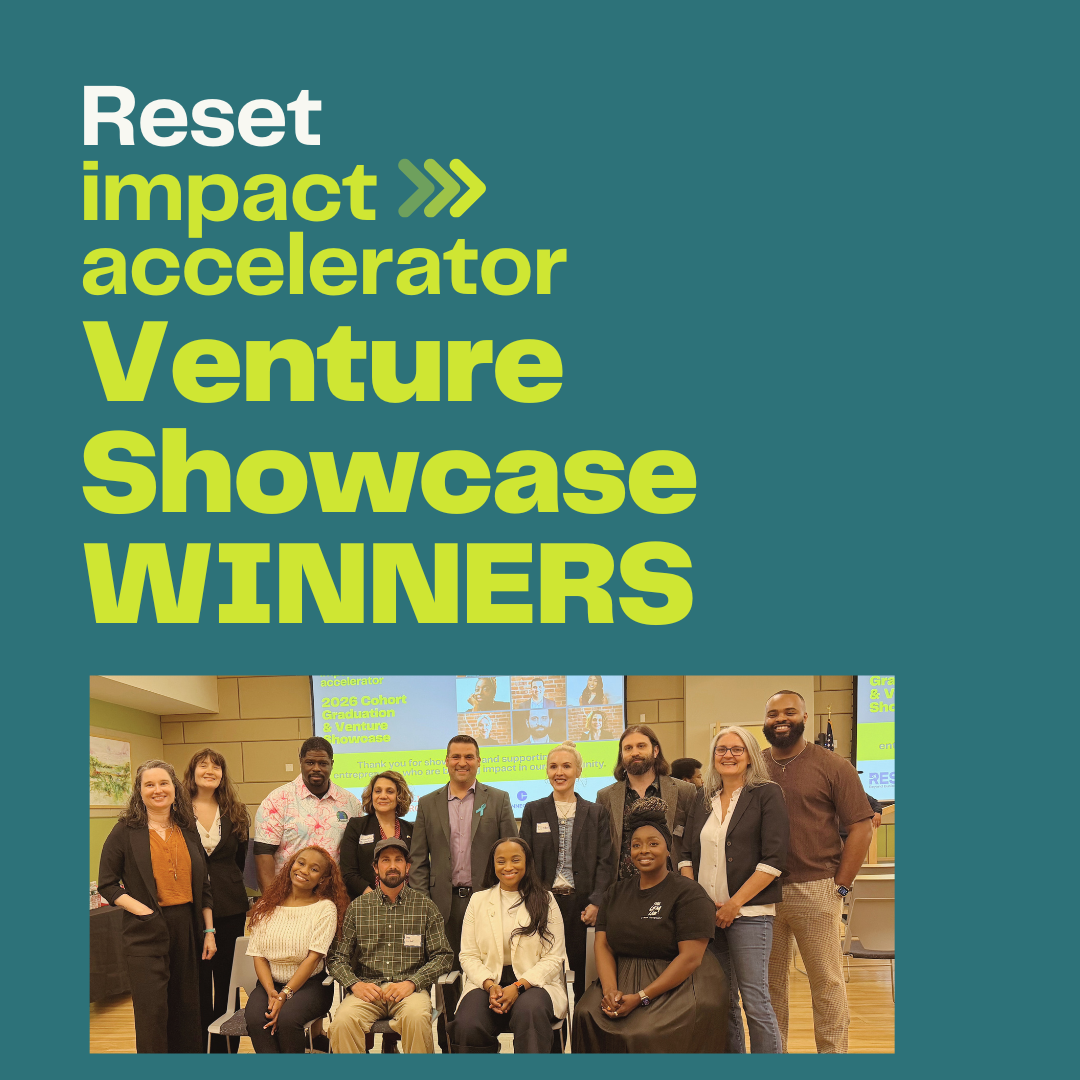
Showcase Awards Over $18,000 in Grants and Prizes
By awalsh • June 26, 2026
Nine Entrepreneurs Celebrate Graduation from Spring Cohort and Share Over $15,000 in Prizes and Grant Support
June 25, 2026
Launching a New Statewide Partnership to Connect Aspiring and Growing Food Businesses with Structured Programming, Education & Resources
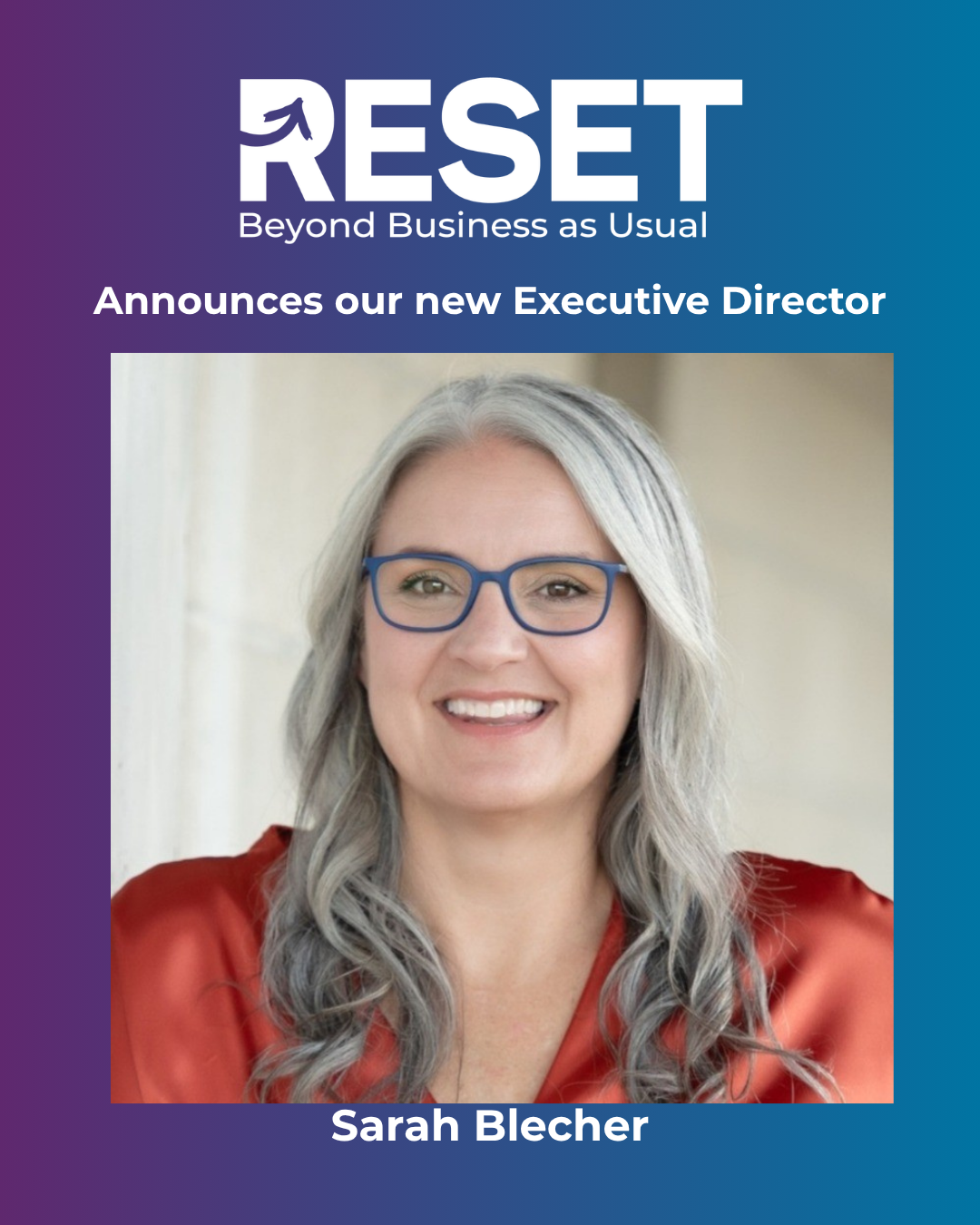
Sarahblecher
June 23, 2026
Marketing Strategist and Connecticut Small Business Mentor Succeeds Sarah Bodley
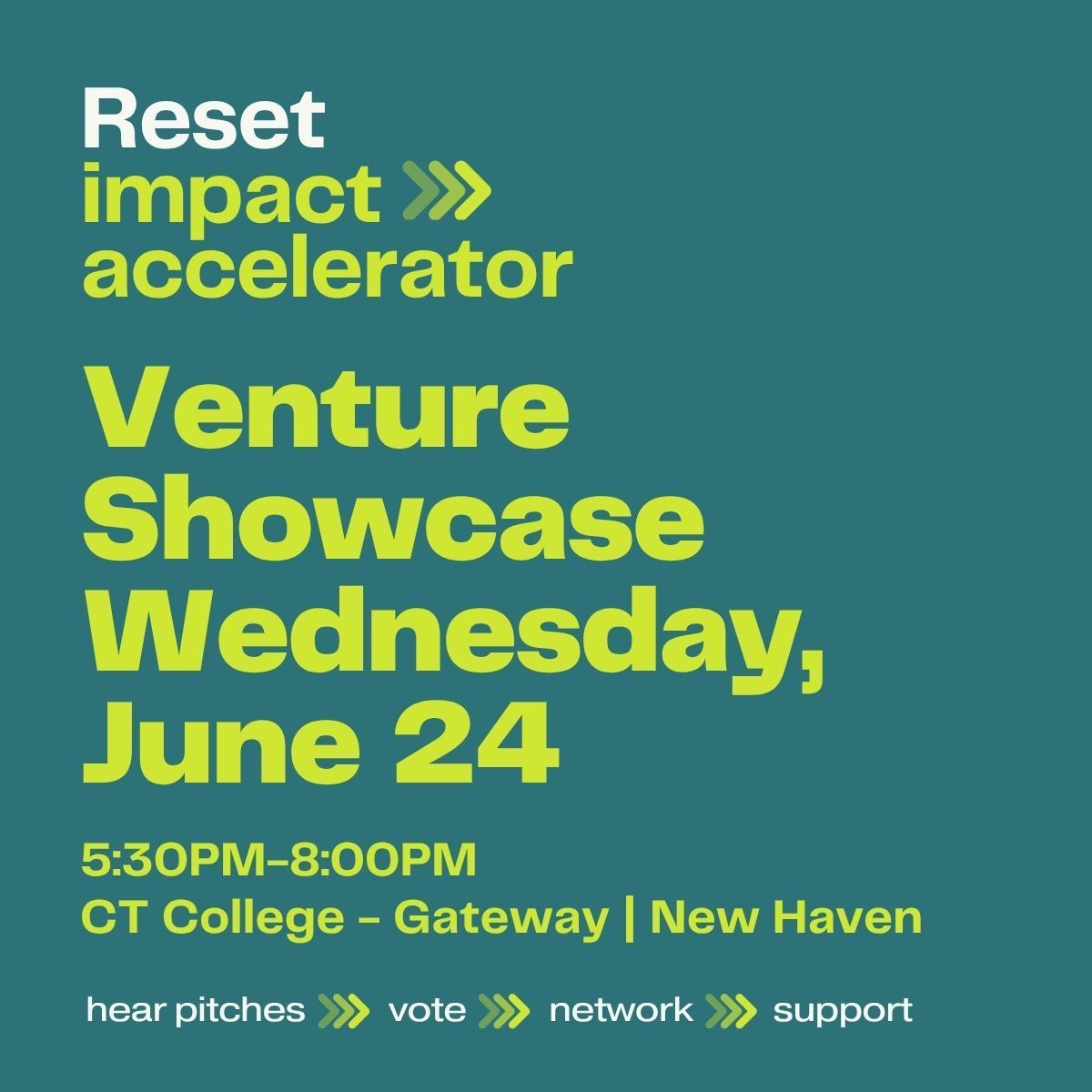
By awalsh • June 4, 2026
Eight Businesses Will Compete for Over $15,000 in Prizes and Grant Support at CT State Community College–Gateway
May 14, 2026
Reset announces its new logo
May 14, 2026
A Day Full of Honest Connection for Entrepreneurs
By SBodley • May 7, 2026
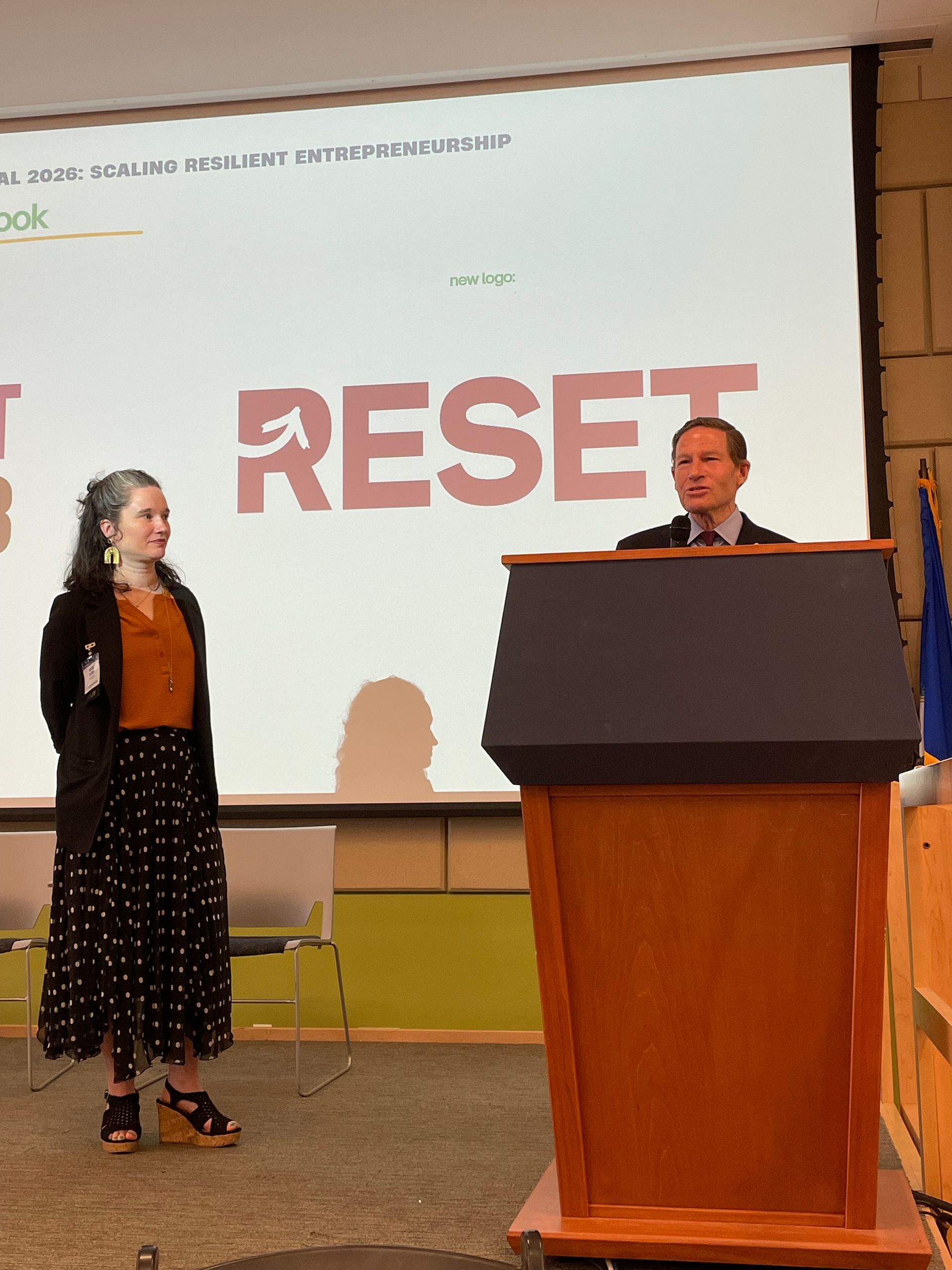
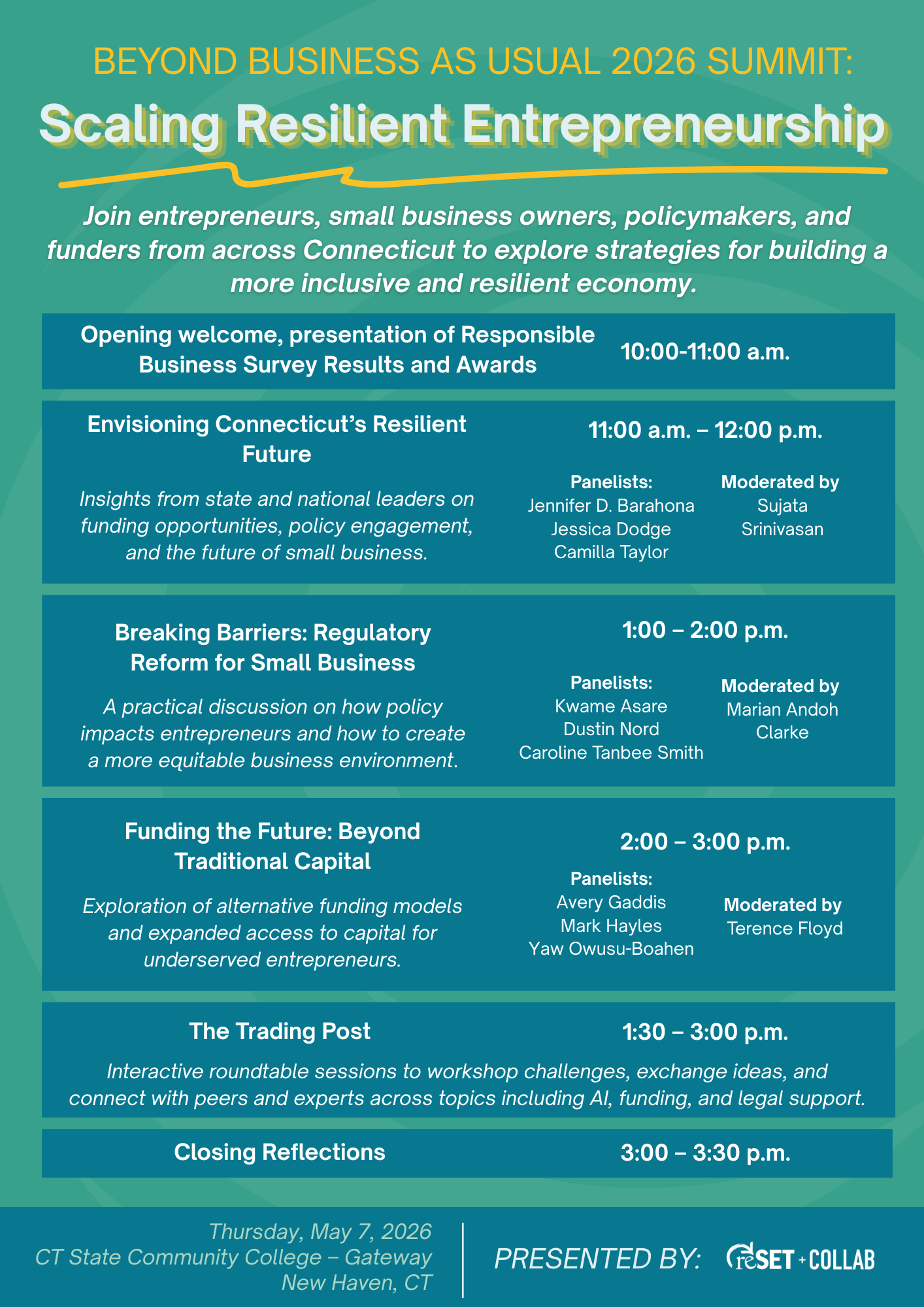
This Spring we asked our community to weigh in on their biggest challenges, interests, and opportunities related to impact-driven and sustainable business. We were proud to partner with CT Sustainable Business Council on this effort. Select findings were shared at Beyond Business As Usual 2026: Scaling Resilient Entrepreneurship, and we aim to continue taking action on the things that rose to the top. Click through the arrows to see the key findings.
By awalsh • April 23, 2026
 Summit Brings Together State Leaders, Policymakers, and Entrepreneurs During National Small Business Week